

What Makes Jamaican Food Unique in Denver, CO?
Jamaican food is unique because six cultures shaped it: the Taíno, Africans, the Spanish, the British, Indians and the Chinese. Each left a dish or a method, from jerk and bammy to escovitch, patties, curry and soy sauce. Slow stews, open-flame jerk and long-cooked curries tie them together. In Denver, CO, you can taste that whole history on one Jamaican menu.
Last Updated: November 6, 2026
Jamaican food is easy to recognize and hard to sum up in a sentence. It tastes bold and deeply seasoned, yet no single country can claim it.
The reason is history. Jamaica’s motto is “Out of Many, One People,” and its kitchen tells the same story, one dish at a time.
At Reggae Pot Jamaican Grill, we cook that island tradition for guests across the Denver metro. Here is where the flavors came from, and how the cooking methods hold them together.
Six Cultures Behind Every Jamaican Pot
Jamaican food is unique because six cultures built it, each adding ingredients and habits that the island kept. From the Taíno and Africans to Spanish, British, Indian and Chinese arrivals, each group left something on the plate. These four groupings explain where most of today’s classics began.
Taíno Roots in Cassava and Fire
The Taíno were Jamaica’s first known people. They grew cassava, sweet potatoes and maize, and fish was a major part of their diet.
Cassava lives on in bammy, a flat cassava bread a little different from the Taíno original. The Institute of Jamaica also credits Taíno influence for pepperpot soup, cooked today with callaloo, salted meats and ground provisions.
The Taíno cooked on a grill called a barbacoa, made from pimento wood. Meat was seasoned and cooked over a low fire to preserve it, an idea that later fed into jerk.
African Heritage and the Maroon Kitchen
Ackee, now Jamaica’s national fruit, was imported from West Africa. Jamaica is the only place where the fruit is widely eaten.
Africans who escaped slavery became known as the Maroons. In the mountains of Cockpit Country, they preserved wild hog in a marinade of Taíno and African-inspired seasonings.
That marinade is where jerk began, and it is the reason Jamaican jerk and Caribbean jerk differ in origin. Jerk is the clearest example of two cultures meeting in one pot.
Spanish and British Imprints
The Spanish settled Jamaica from 1509, and the English took the island in 1655. Both left dishes behind.
Escovitch fish takes its name from the Spanish escabeche. The Spanish also brought the empanada, while the English brought the Cornish pasty.
Those turnovers helped shape the Jamaican patty, which local cooks remade with island seasoning. You can read more about how the Jamaican patty took shape in our earlier guide.
Indian and Chinese Arrivals
The first East Indian indentured laborers arrived in 1845 and brought curry with them. The Institute of Jamaica also credits them with bringing rice cultivation to the island.
Curry goat is now a Jamaican classic. Turmeric from India also gives the patty crust its yellow color.
The first Chinese group arrived in 1854 from Hong Kong, and most Chinese migrants were Hakka. The Gleaner credits them with soy sauce, now used in many Jamaican meat dishes, plus the wok and stir-frying.
Cooking Methods That Give Jamaican Food Its Character
The ingredients came from many places, but three cooking methods make the food taste Jamaican: jerk over fire, slow stews and long-cooked curry. Each one builds flavor over time. That is why Jamaican dishes taste deeply seasoned, with heat as only one part.
Jerk Over Open Flame
Jerk is a Jamaican tradition born of hardship and resistance, and a remnant of Maroon and Taíno cultures. The meat is marinated first, then cooked over fire.
The marinade soaks in before the heat ever touches the meat.
Our jerk chicken follows that pattern: half a chicken marinated in a blend of Jamaican herbs and spices, then grilled over open flame.
Slow Stews in Rich Brown Sauce
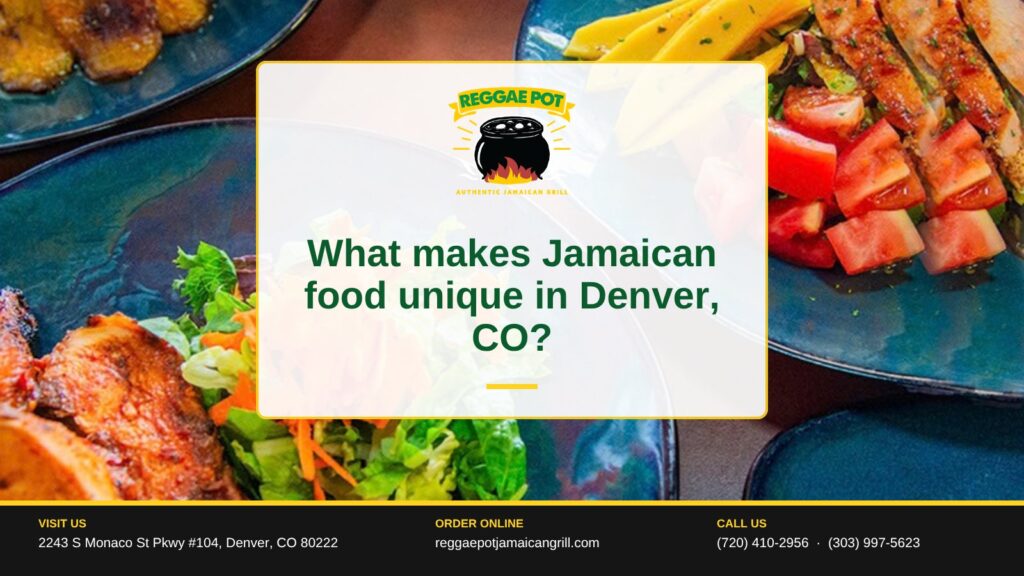
Many Jamaican dishes are built for patience. Flavorful cuts are simmered until they turn tender and the sauce thickens around them.
Oxtail is a classic example. On our menu, it is slow cooked in brown sauce with mild spices, chunky potatoes, carrot and butter beans.
If you are deciding between the two styles, our guide on whether oxtail or jerk chicken suits you better compares them side by side.
Curry Cooked Low and Slow
Curry arrived with Indian workers, but Jamaican cooks made it their own with island seasoning. The result tastes warm and savory, and you can learn what curry goat tastes like in our flavor guide.
Our curry chicken roti is freshly cut chicken seasoned with Jamaican spices and curry powder, then slow cooked and served with roti. Slow cooking lets the spices soften into a thick sauce.
Wrapping curry in roti also turns it into a meal you can hold.
Seasoning Built in Layers, Not in One Spice
Jamaican food rarely leans on a single flavor, because herbs, warm spice and heat are stacked so each bite carries more than one note. That layering is the shared language across all six cultures. It turns a Taíno method, an African marinade and an Indian curry into something recognizably Jamaican.
The proportions change from dish to dish. That is why the same island seasoning can taste fiery in jerk and mellow in a brown stew.
Our menu shows this, too: its island specialties are seasoned with Scotch bonnet peppers and jerk spices. The heat matters, but the balance around it is what makes the food memorable.
How Island Cooking Made Its Way to Denver
Jamaican food travels with the people who cook it. In our case, that is Tamara Nisbeth, the owner and lead chef behind our kitchen, originally from Montego Bay. She now calls Colorado home, and the island’s cooking traditions came with her.
Tamara learned to cook young, in a family of cooks. She takes pride in the traditional methods of authentic Jamaican cooking, always uses fresh spices and works to source the freshest produce.
Cooking those methods in Denver also means cooking at altitude. Colorado State University Extension notes that simmered or braised meats may need about one-fourth more time at 5,000 feet than at sea level. Denver sits above that mark.
Tracing Each Influence to a Dish
Once you know the history, a Jamaican menu reads like a map of the people who shaped it. This table links each of the six cultures to what it brought to the island. It also shows where you can still taste each one today, including dishes on our own menu.
| Influence | What It Brought | Where You Taste It Today |
|---|---|---|
| Taíno | Cassava, the barbacoa grill | Bammy, pepperpot soup, the roots of jerk |
| African and Maroon | Ackee from West Africa, the jerk marinade | Ackee and saltfish, jerk chicken |
| Spanish | Escabeche, the empanada | Escovitch red snapper |
| British | The Cornish pasty | Jamaican patties |
| Indian | Curry, turmeric, rice cultivation | Curry goat, curry chicken roti |
| Chinese | Soy sauce, the wok, stir-frying | Many Jamaican meat dishes |
Most of these influences show up in the dishes on our menu, from ackee and saltfish to baked patties. Our menu calls ackee and saltfish Jamaica’s national dish. Our guide to the best fish for escovitch traces the Spanish thread further.
What This Means for Your Next Jamaican Meal in Denver
Jamaican food is unique because it brings six cultures together through jerk, slow stews, curry and seasoning built in layers. Knowing where each dish came from, from Taíno cassava to Chinese soy sauce, makes every plate you order in Denver taste a little richer.
At Reggae Pot Jamaican Grill, we cook these island classics using the traditional methods that shaped them. Pick a dish that carries this history and call (720) 410-2956 to order it, then plan your visit with our Denver location details.
Frequently Asked Questions
What is Jamaican food known for?
Jamaican food is known for jerk, meat that is marinated and then cooked over fire, along with ackee and saltfish, curry goat, oxtail and patties. It is also known for bold, layered seasoning and slow-cooked stews. Many of these dishes trace back to different cultures that settled on the island.
What is the Spanish influence on Jamaican food?
Spanish colonists first settled Jamaica in 1509, and their food left a mark. The Spanish brought the empanada, which, with the English Cornish pasty, shaped the Jamaican patty. Escovitch fish also takes its name from the Spanish escabeche.
What did the Taíno contribute to Jamaican food?
The Taíno, Jamaica’s first known people, farmed cassava, sweet potatoes and maize, and their diet leaned heavily on fish. Their cassava bread lives on in bammy, and pepperpot soup is credited to their influence. Their barbacoa grill and low-fire cooking also helped shape jerk.
How did Indian food influence Jamaican cuisine?
Indian indentured laborers, who first arrived in Jamaica in 1845, brought curry with them, and turmeric from India colors the patty crust. That curry is the root of curry goat, curry chicken and curry served in roti. The Institute of Jamaica also credits Indian laborers with bringing rice cultivation to the island.
What is the Chinese influence on Jamaican food?
Chinese migrants, who first arrived in Jamaica in 1854 and were mostly Hakka, brought soy sauce, the wok and stir-frying. Soy sauce is now used in many Jamaican meat dishes for both color and taste. The Gleaner calls soy sauce perhaps the main Chinese gift to Jamaican cooking.